
This is "The Way"
What I got from 12 weeks doing The Artist's Way

Head’s up! This Fall I’ll be doing a special 4-week Master Class with 92NY called Mastering Character - I’ll lead you, week by week, through three psychological layers, developing and deepening your characters through a series of exercises. It’s all online, Tuesday nights at 6:30 from 9/15 - 10/6. You can register here if you’re interested!
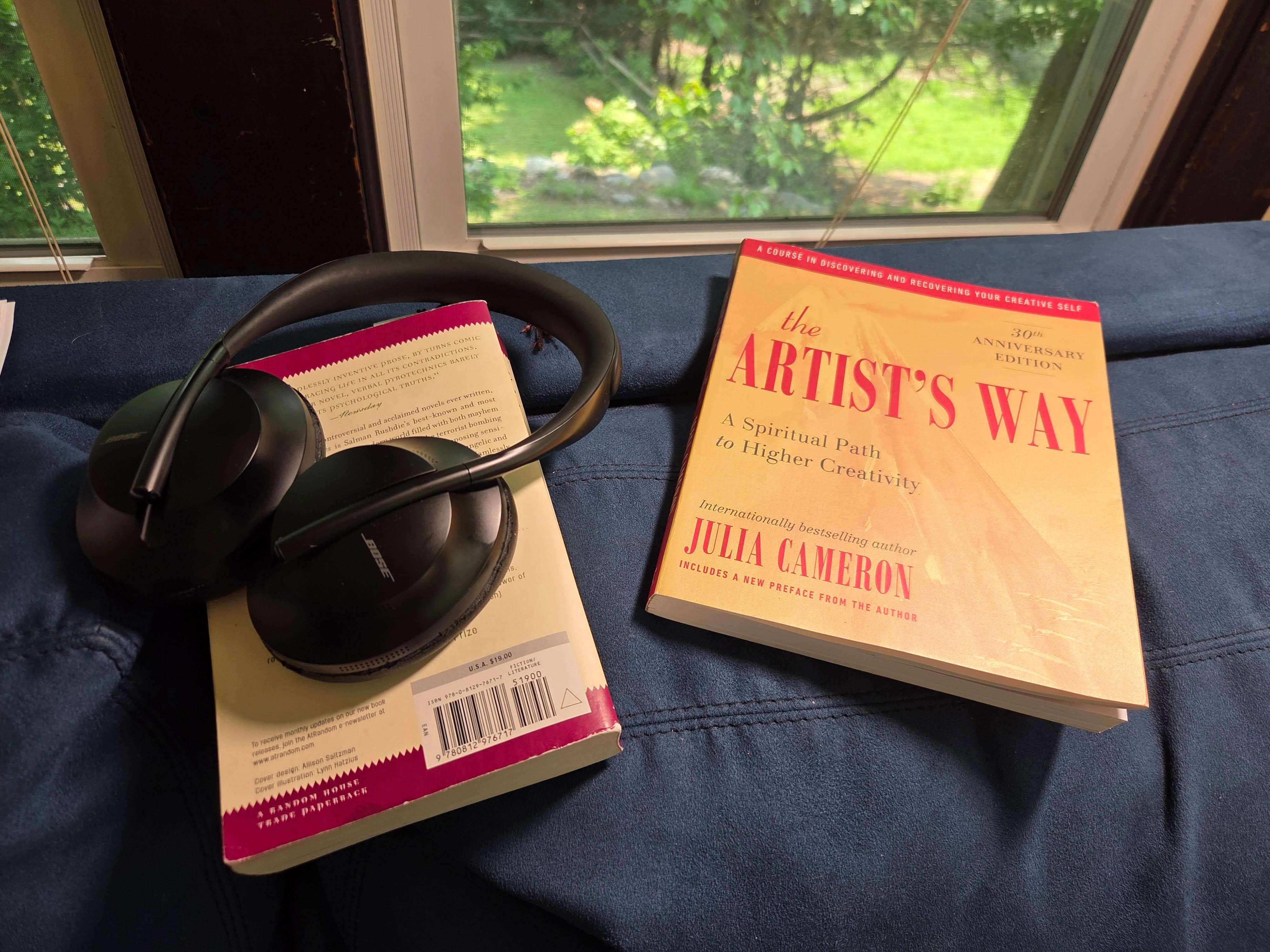
For years, I'd been hearing about The Artist’s Way. Unlike other perennially popular craft books like Bird by Bird or Writing Down the Bones, there was always a different kind of reverence for this 1992 “Spiritual Guide to Higher Creativity” by Julia Cameron.
People told me it had not just completely changed their writing, but changed their entire lives—even saved their lives.
So, naturally, I avoided it for the past thirty years.
Over and over, unexpected students would tell me about it in ecstatic terms, as would other writers I trusted and admired. One even volunteered to run a free Artist's Way group through a local Buddhist center. These exist all over the country and many claim to have thousands, even tens of thousands of members.
But I had always held back, for two reasons:
First, all I knew was that it involved freewriting three pages of stream of consciousness ramblings, by hand, every morning… which sounded both arduous and wasteful.
And second, the spiritual stuff in the subtitle, plus the intense devotion to it was a little unsettling… bordering on cultish.
Now—I'm a pretty openminded guy when it comes to spirituality, and I think it has a place within art, and that art has a place within it. Despite growing up in a pretty secular home, I did convert to Judaism a few years ago, because, among other things, I’ve found it to be a religion that is deeply rooted in questioning and skepticism. I've always been an odd mix of naively idealistic and inherently skeptical. I’m not a cynic, basically, but I'm always open to dissecting and questioning my optimism. It's a big part of what makes me tick as a writer, and as a teacher.
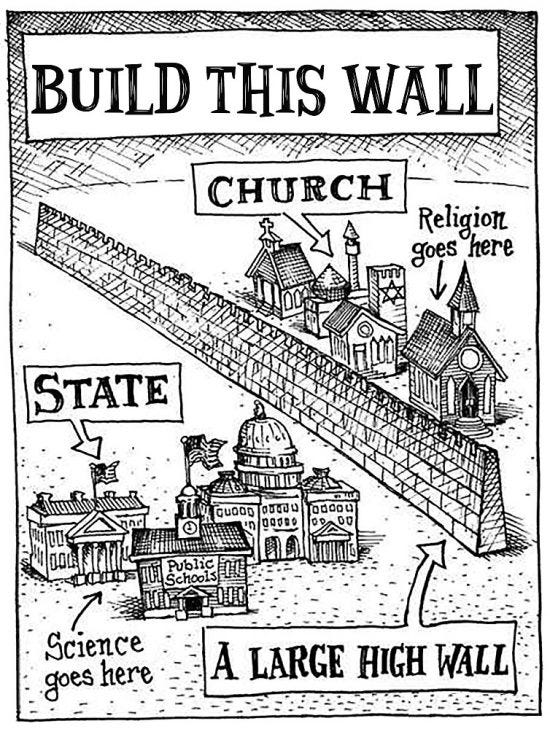
But when people start in connecting God or other cosmic forces directly to the process of writing, or making art… my skeptic hat turns into a skeptic helmet. I want a separation of Church and State in my government, and in my writing studio as well.
Don't get me wrong. I believe imagination and creativity and storytelling are all vital things in human life, and I even personally find a kind of holiness in it. But I want that to be the subtext, not the text—I’m more comfortable showing, not telling when it comes to the spiritual side of poetry and storytelling. When I read Flannery O’Connor, for one example, I don’t walk away feeling like I’ve had my arm twisted into Catholicism, but I can see the ways in which her faith plays a role in her work on deeper levels. I can admire that without feeling like I’ve been preached to.
When it comes to craft lessons, I think it’s even more worrisome. I don't think that God is in the business of dropping sudden inspiration, or unusual verbal skills into the minds of some and not others. I don't think that any artist should need to pray, or rub crystals, or locate their chakra, in order to sit down and write a short story—though if they want to they should knock themselves out. When I run into trouble with a thing I'm writing, I want to place my focus on the nuts and bolts of craft to solve the issues, not wait for divine intervention.
But a few months ago I decided to give The Artist's Way a whirl at long last... I’d just finished a long journaling project with Suleika Jaouad’s The Book of Alchemy, and was actually really enjoying having a reason to sit down and write, by hand, every morning.
Naturally, in the various essays inside of Jaouad’s book, The Artist’s Way came up more than a few times, with that same reverence. And each time it did, I wondered if maybe it was finally time to suck up my apprehensions and just see what it was really about.
So I did.
Only, immediately upon opening the first chapter, I was sure it was a mistake.

Cameron begins right away by talking about harnessing our “spiritual electricity” and aligning with “the creative energy of the universe.” She doesn’t hold back at all, but dives straight in to her vision of God as a Creator who's greatest desire is for us to create as well.
“For most of us, the idea that the creator encourages creativity is a radical thought. We tend to think, or at least fear, that creative dreams are egotistical, something that God wouldn’t approve of for us…”
Soon after this comes a authoritative declaration of “Basic Principles” that feels a bit like something Cameron might have wanted to nail to the door of the Iowa Writers Workshop:
1. Creativity is the natural order of life. Life is energy: pure creative energy.
2. There is an underlying, in-dwelling creative force infusing all of life -- including ourselves.
3. When we open ourselves to our creativity, we open ourselves to the creator’s creativity within us and our lives.
4. We are, ourselves, creations. And we, in turn, are meant to continue creativity by being creative ourselves.
5. Creativity is God’s gift to us. Using our creativity is our gift back to God.
6. The refusal to be creative is self-will and is counter to our true nature.
7. When we open ourselves to exploring our creativity, we open ourselves to God: good orderly direction.
8. As we open our creative channel to the creator, many gentle but powerful changes are to be expected.
9. It is safe to open ourselves up to greater and greater creativity.
10. Our creative dreams and yearnings come from a divine source. As we move toward our dreams, we move toward our divinity.
It's… a lot. There are letters to write (and send!) to your inner child, there are contracts to fill out to commit yourself to the act of art-making… instructions on how to make your own “God jar.” It was actually a lot worse than I’d imagined. (I’ll note as well that, divided up into 12 weeks, and involving lots of testimonials and oaths, The Artist’s Way shares much with AA/NA, including that emphasis on faith in a higher power, and a push towards gathering in accountability groups.)
At the same time it seemed, well, kind of fun? Ultimately harmless, potentially quite helpful. If I could just quiet that cynic I was just saying I didn’t have in me, and give it a whirl… maybe it could put some gas into my own tank.
And in the end, I'm glad I stuck with it. I got a lot out of the experience, and have, I regret to say, even started to tell other people how much I liked it. But I won't exactly count myself as a full member of the cult.
My enjoyment of the book didn’t have much to do, in the end, with my “spiritual electricity” and I remain unconvinced that my writing life is forever indebted to a divine Creator… but the tools Cameron introduces really do help. And I think they can hardly be appropriated by even the hardest-core atheist artist (say that ten times fast!).
The two main tools of the Artist's Way are “Morning Pages”—three handwritten pages every morning—and the “Artist's Date” —or planning one weekly opportunity to take yourself out for some inspirational experience: a stroll in a garden, a visit to a museum, a ticket to a matinee, etc.
I doubted I would get much out of three pages of freewriting. I really wanted prompts, assignments… something I could turn into an essay or story idea. Instead, Cameron says to just write about whatever is on your mind, to clear out all the anxiety and doubt and mundane junk that becomes a part of a creative block. (There are general “Tasks” at the end of each chapter, but they are not necessarily meant to be prompts for the Morning Pages .)
Similarly, I didn't see myself setting aside precious time to go see random movies in the middle of the day, as much as I imagined I would enjoy that. I had things to write and stuff to do! If I was going to go wandering around in strange museums, I wanted it to be because I was there researching, or spending time with friends and family.
But I diligently brain-dumped every morning, filling page after page with stuff I never wanted to read again. And it helped, within a few days, to take my constant inner chatter down to a dull roar. Writing stuff down, I tend to forget, helps get it out of your own head. It's… kind of why we do this in the first place.
People may get the same mileage out of a diary or a dream journal. It's just very freeing to write without having to worry about sounding articulate or coherent or witty or annoying. Not trying to imagine what some imaginary critic or colleague or family member might think about it. Just the freedom to whine away about silly things without having to feel ungrateful or embarrassed. In the classroom we call this “low stakes writing” and its been shown to help resolve Writer's Block.
It can be sort of fun, even, to indulge in some good old teenagery melancholy, or get suddenly rhapsodical, without having to think about anyone else rolling their eyes.
I found it took maybe 30 minutes in the morning to write 2-3 pages, and I did feel much clearer-headed for the rest of the day as a result. I found that I had a lot less resistance to sitting down to start more serious work later in the day. I even managed to scribble my way towards one or two decent epiphanies across several notebooks… so there's that.
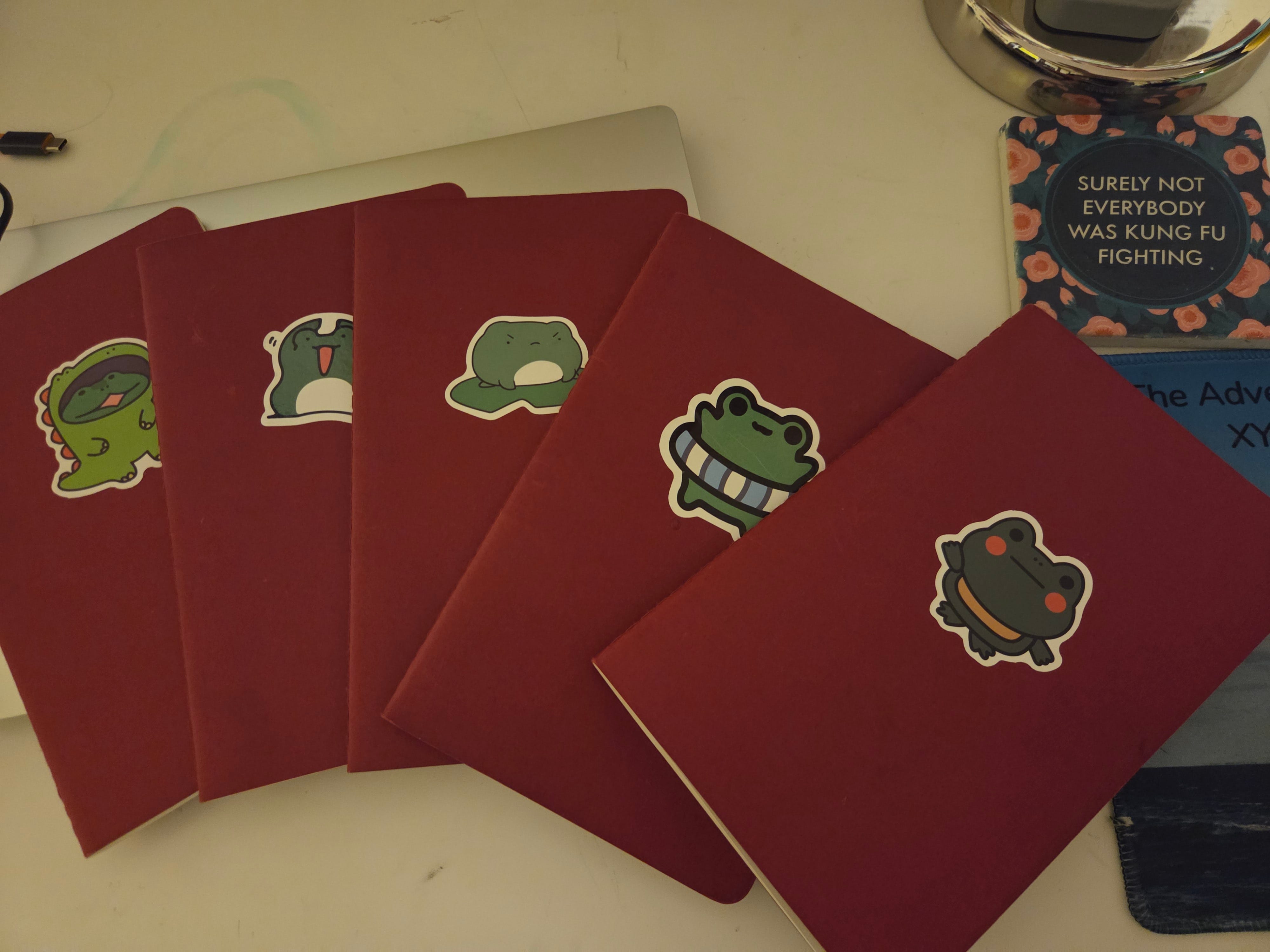
With the Artist’s Dates, I realized quickly that it didn’t have to involve traveling or buying tickets to things. The first week I just decided to listen to The New Yorker’s Fiction podcast while I mowed the lawn. Another week I decided to sit and watch an old movie after the kids went to bed, while my wife was at her book club. I went to the local coffee shop to read my book for a half an hour. I took a walk with the dog and just listened to classical music.
I found it could fold right into my schedule and be as basic or complicated as I wanted. It's really just a way to remind yourself to set aside some time to just discover new and interesting things, and to indulge in some “art-me time” every so often. It’s a welcome reminder that you’re allowed to do things like this, that it’s the fun part of being a writer—and importantly a way to feel like you actually are one.
It was great food for thought, every week—and it did really feel like a welcome change to my process.
There were also a lot of other parts of the book that resonated with me, and even when things didn't, they forced me to think about why they didn't.
For one example, in the first chapter Cameron talks about what she calls “Shadow Artists,” her term for those who deeply want to be creative but have been told they shouldn't be, and so live in a kind of semi-permanent frustration, often taking jobs that put them in peripheral contact with artists or art in some way… as close as they can get without facing their own fears.
This struck a chord with me. It’s something I’ve noticed a lot in those I’ve met over the years. I'll meet someone, become friendly with them for months or years, only to have them suddenly announce that they actually always wanted to be a writer too, and in fact had written for a while at one point before giving it up. And then, occasionally I would meet someone and find an odd hostility emerging for seemingly no reason, just after finding out that I'm a writer.
According to Cameron, this may set off a “Shadow Artist,” because they have put up a bunch of psychic defenses to justify them not having pursued the artistic path they initially wanted. They've convinced themselves that they’ve made a far wiser choice in going a more practical route… they tell themselves they couldn't possibly have succeeded because of various external factors: nobody reads anymore, or the publishing industry is corrupt and broken, (sometimes too “woke” or not “woke” enough)… there's no money in it, there's no way to succeed unless you know someone. It's all rigged.
And look, frankly, they're really entirely wrong about all these things, I'll be the first to admit. There's always a thousand reasons not to write. Hopefully you just can find at least one good reason to do it anyway.
A lot of The Artist's Way is geared towards helping people like this to resolve the hard blocks that formed in their minds a long time ago, sometimes after a parent or a friend shot down their budding creativity, often when they were quite young. It's a father who demands you become a doctor, a English teacher who mocks the essay you were so proud of, or even a romantic partner who dismisses or demeans your creative passions. I'm sure that, in a huge number of cases, these are very potent sources of creative blockage for a lot of people, and I do think Cameron’s book could be a really helpful and even healthy way for them to start to work on those things. Especially for those who grew up religiously, and had that unique brand of guilt and judgement mixed in with the rest… this book really could be a terrific solution.
Mainly, what The Artist’s Way helped me recognize is that I was very lucky to avoid that fate.
My parents encouraged my writing from a young age, and so did many of my teachers. No one close to me ever tried to talk me out of studying creative writing… in fact several explicitly steered me toward it. My parents are both big readers. Growing up, my mother had the obituary of her high school creative writing teacher up on our refrigerator, in a place of honor. I was able to do annual creative writing summer camps at a local community college as a kid, and when I aged out of that, it was arranged for me to go back again and be a kind of Teaching Assistant to the instructors instead.
My parents helped me mail a fantasy novel to a publisher at age 14, a sitcom script to CBS at age 15, and sent me to a life-changing summer pre-college Creative Writing program at Brown University when I was 16. There, I met other would-be writers for the first time in my life, and saw a hidden world existed that could show me how to become one. I think, all the time, about how different my whole life might have been without that one opportunity.
When I left home a year later to get a college degree in “The Writing Seminars” my parents only asked that I take one computer programming class every year, as a backup, just in case. And later, when I decided I wanted to get an MFA they didn’t tell me it was all a waste of time or money—they helped me fill out the loan applications, and gave me a part-time job fixing computers for them so I could afford to pay my rent.
Similarly, my spouse doesn't resent my creative work or try to get me to stop writing. We met in writing classes, and doing theater. She's an editor, and has, several times, moved heaven and earth to make it possible for me to attend residencies, travel for research, and even just meet my own regular writing goals, week by week. She's still my first reader, my sounding board, and the one to whom I dedicate every book.
I mention all this not to gloat, I swear, but just to express my real gratitude, and say I recognize what a difference that’s all made in my life. I recognize it more acutely now, thanks a lot to The Artist’s Way.
I have my critiques, of course. I don't necessarily buy that everyone out there is born with a deep urge to create, or that it's a problem that we often grow out of it over time. I'm a teacher and I love seeing people discover the joys of writing, but I don't know that everyone out there is secretly dying inside from a lack of it in their lives. Still, I'm sure there are lots of people who are—as I said I run into them all the time—and I do think this book would be a big help to those who are in that position.
Mostly, The Artist’s Way comes back to facing various fears, of criticism and failure and so on. This is something that, in my experience, anyway, never really goes away. No amount of past success or praise will make you immune to it. It’s inevitable to go through periods of doubt and worry—there are times when I have found myself wondering if I want to keep going, or what the point of it all is. The book reminds me that this is just a part of the process, no need for despair.
For all the God as Creator stuff that I struggle with in The Artist's Way, it and Cameron are firm about one thing, that I think underlies all those spiritual elements, and explains why they're so integral. Cameron repeatedly asserts that being creative is not unnatural. Not special. We don't need to be blessed with special talents, we don't need to pass into a mystical trance. We'll be more creative as soon as we stop refusing to let ourselves be creative.
Creativity isn’t a rarified condition that you have to hunt around for. It's something that will come naturally as long as you aren't in some way blocking it.
Too many days go by where I don't sit down to write because I feel like I'm not sharp enough, didn't get a good enough night's sleep, I have a sore neck, I can’t focus until I eat something, then I ate too much and need to digest, etc. etc. etc. Fairly often lately, I get so twisted up I think that I can't possibly do good work unless I've performed all my various preparations exactly right… fifteen minutes of meditation, phone set to work mode, coffee hot but not too hot, classical music on but no opera because that’s too distracting… you get the idea. I sometimes start to treat it like a magical realm I can’t enter without a password. Or, maybe, ironically, like a religious state I can’t reach without first performing all my rituals.
Cameron’s book was a welcome reminder to me that all that is nonsense, even it’s own kind of superstitiousness, and will inevitably turn into a fresh block.
I don't think everyone should be an artist, or that we'd all be happier if we were. But I think anyone is capable of it. We just have invented a lot of ways of minimizing its importance and even holding it in. We fear rejection, frivolousness, failure, time-wasting, and self-exposure. Many have been told that making any kind of art is pointless, useless, or meaningless. That to write is indulgent, egomaniacal, foolish, or even a road to certain poverty, addiction and depression. As politely as possible, I say screw all of that.
In fact it is fun and enriching and rewarding and healing and, I'll throw Cameron a bone here, even potentially holy. Not because God the Creator wants us to create—although what do I know, maybe He/She/They do. But because it can afford anyone a place to explore and appreciate all the complexities of our existence. I don't know why we're here any more than anyone else does, but I do like asking the question, one morning after another.